Get in touch with us at info@roarcollectivepk.com

In the spotlight
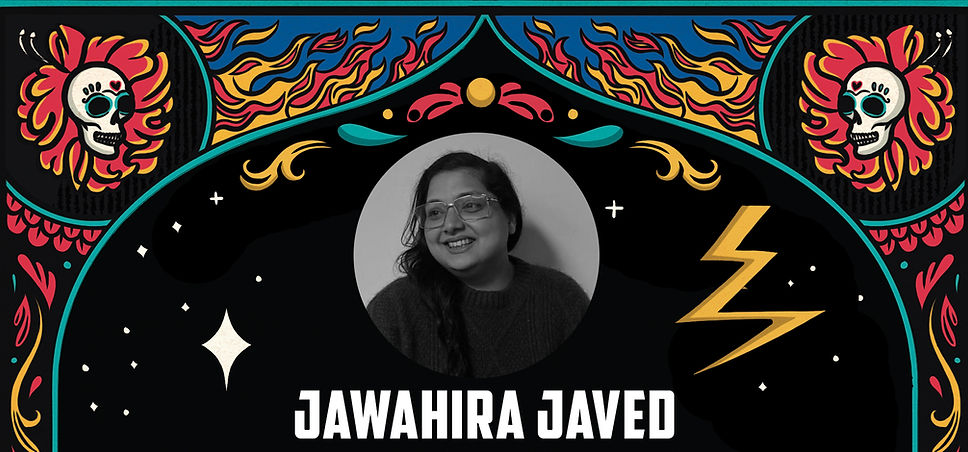
In conversation with the imaginative Jawahira, her deep love for storytelling and culture shines through in every idea she touches, from her early fascination with words and narratives to leading creative as Executive Creative Director at Red Publicis. Thoughtful yet fearless, Jawahira crafts work that doesn’t just communicate. It challenges assumptions, sparks meaningful dialogue, and resonates long after the campaign ends.
What’s your story?
I started my career in 2013 as a Creative Executive at Interflow. But storytelling started much earlier for me. I grew up obsessed with books, films and television, anything that carried a narrative. I used to write poems and small write ups for a magazine called Young Times and seeing my words printed there felt magical.
Over time that love for stories turned into a profession. Advertising, for me, became the perfect intersection of storytelling, culture and human behaviour. Today, after more than a decade in the industry, I am leading creative as Executive Creative Director at Red Publicis and still doing the same thing that excited me as a kid:
telling stories that make people feel something.
What is the best advice you have ever been given and by whom?
My father always said: hard work always pays off.
No matter how difficult something gets or how impossible it may feel, if I know that I have given it my hundred percent, it will eventually pay off. It sounds simple, almost obvious, but over time I have realised how true it is. Talent may open the door, but consistency and discipline are what keep you in the room.
If you were not in the creative industry, what would you be doing instead and why?
Probably a lawyer.
When I feel strongly about something, I can argue my case very passionately. As a child I genuinely wanted to become one, until I read an article about a lawyer being murdered over a case. I was thirteen and that was enough for me to reconsider my life choices. Advertising suddenly felt like the safer battlefield.
Out of all the campaigns you have worked on, which one stands out as the most memorable and why?
A Jazz campaign we did for Women’s Day stands out. The campaign was banned shortly after it went live, possibly because the insight was too close to home.
But in the two days it was up, I read countless comments from women saying the message was painfully accurate. In many parts of our society, especially rural areas, a woman simply owning or using a phone can still be seen as “kharab.” (immoral or inappropriate).
Those reactions reminded me why we do what we do. Even a short lived campaign can spark a conversation that needs to happen.
Best strapline of all time. What makes it stick for you?
For years my answer was Mastercard’s line, “For everything else, there is Mastercard.”
But last year at Cannes I had the privilege of meeting the team behind the film The Final Copy of Ilon Specht, the documentary about the creation of L’Oréal’s line:
“Because you are worth it.”
Hearing the story behind it, how radical it was for its time and how it gave women a voice in advertising, changed my perspective. Now that line feels timeless to me. Every creative should watch that film at least once.
What would your dream collaboration look like and with whom, dead or alive?
This industry has already given me the privilege of working with many incredible people and I am grateful for that.
But if I had to choose, I would have loved the chance to work with the late Sir Piyush Pandey. The Fevicol campaigns were the first pieces of advertising that made me realise how intelligent comedy could transform a product that most people would never think twice about.
His work carried such powerful cultural insight and simplicity that it always made you wonder why no one had thought of it before.
In terms of work created by others, which campaigns do you wish you had made and why?
Three come to mind immediately:
Tanishq’s campaign “Woh pehla heera dekar toh dekho” (Just give that first diamond and see) because it is built on such a beautiful human insight about the first gestures of love. Tanishq, for me, is the holy grail of brands that understand storytelling. The brand does not need to take up ninety percent of the screen to make its presence felt. A strong point of view and a powerful story can do the job just as well, sometimes even better.
Nike’s “The Huddle” which captures raw emotion, community and determination in a way only Nike can.
And more recently, Seedhi Saadhi Khushi (simple, honest happiness) by Sooper Biscuits. It is simple, beautiful and incredibly effective.
How has Cannes Lions See It Be It shaped your view of creativity and leadership?
See It Be It gave me something incredibly valuable: a sense of belonging to a global sisterhood of creative women.
As you move higher in leadership the journey can become lonely. But SIBI reminded me that there are phenomenal women around the world facing the same challenges and supporting each other.
It also helped silence that little voice of impostor syndrome. The two biggest lessons I took away were simple but powerful.
I am not alone. And I am enough.
Looking back, what advice would you give your younger self starting out in the creative world?
Do not rush.
Ambition is important, but so is your mental health and I know you will laugh at it but WOMAN it is important!. Success will not mean much if you are exhausted, unhappy or disconnected from yourself. Pace yourself and you will enjoy the journey.
What excites you most about the creative industry right now and what is next for you?
A lot of people are afraid of AI, but I see it as one of the most powerful tools creatives have ever had. It does not replace ideas. Ideation still has to come from humans. But it can help bring ideas to life faster than ever before through mood boards, visuals and prototypes. Right now I am exploring that potential while working with a new team and fresh talent. Different perspectives and new ways of thinking are always energising. There is something very exciting about meeting young creatives. They remind you why you fell in love with this industry in the first place.
Some of Jawahira's work can be viewed in the gallery below: