Get in touch with us at info@roarcollectivepk.com
In the spotlight
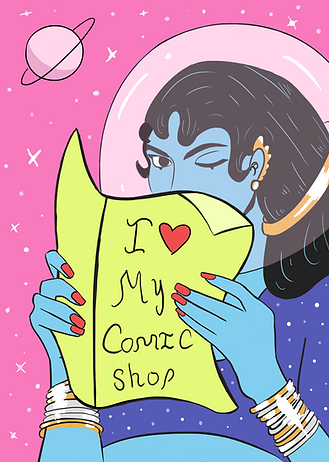
Meet Sahar Majid, a multidisciplinary artist and designer whose work spans illustration, animation, and design. Driven by a love for storytelling and fantasy, her practice centers on expressive, character led narratives that explore social themes with sensitivity and imagination. From hand drawn animation to purpose driven design, Sahar’s work reflects a thoughtful, evolving creative voice shaped by curiosity and care.

What’s your story? Where are you based, and what early experiences shaped you as an artist?
Growing up, I was obsessed with fantasy books like Percy Jackson. That coupled with my love for Golden Age Disney movies made me want to create worlds of my own and my way to do that was first and foremost through writing, which I practiced throughout my adolescence.
At some point, when I was a bit older, watching Inside Out with my siblings, I realised that, if I loved these movies and fiction so much, why not try becoming an artist? But there were too many things I was interested in and honestly, I couldn’t pick. I really wanted to do it all. So when it was time to enrol in university, I chose to major in Communication and Design, which gave me exposure to everything; from creative writing to filmmaking and also, of course, design. That was really my first time gaining a proper understanding of it as a discipline and as I learned more about it, I began to see just how prominent it was in our everyday lives from furniture to packaging to services.
Alongside illustration and animation, I developed a great interest in it and explored how crucial it was in the social and environmental sphere. It became a way for me to start working on issues that mattered to me like gender or climate change.
After graduating, I did personal design projects while pursuing a career in illustration at an Edtech company. I also delved further into researching these areas and participated in the Peace Gong Fellowship with a focus on disaster risk resilience in Pakistan. These experiences made me realise what was important to me in my career and I knew that I wanted to focus on meaningful projects that are challenging but also expressive and so now I often combine both design and my artistic practice to achieve this.
Your work spans illustration, UX/UI, graphic design, and animation. Which medium feels most true to you, and why?
Animation, specifically hand-drawn and stop-motion animation, is a medium that really pulls at my heartstrings. The way that it breathes life into a story is so enchanting and that’s because, for me, animation is about little moments; the way hair flies in the wind or a smile curls on a character’s mouth.
It requires a certain understanding of science and so it’s an appreciation of the natural world, an excuse to slow down and observe, which I find quite grounding but also unlimiting at the same time. You can sincerely create whatever you imagine in your mind and it allows you to express things you can't necessarily do with speech. I am honestly just in constant awe of animators and their aptitude for storytelling, movement and emotion and am greatly inspired by it in my daily life.

Your visual style is layered, expressive, and narrative-driven. How did this distinctive voice develop over time?
I think that the story is the most important aspect of every illustration or animation I create; especially if it’s character-driven work. This is partially because I wrote fiction a lot when I was younger and so creatively, I have been a writer first and then an artist. I find it natural to use storytelling as my starting point and it’s essential for me to flesh out a character in order to connect to it. My hope is that it translates to the viewer. Although, I do a lot of my thinking on paper now, with thumbnails and storyboards, so it’s not necessary that I have everything mapped out or written down before I actually begin drawing.
I have always been drawn to depicting women because I have seen very few complex female characters who I could relate to in popular media while growing up. I want to see women who are flawed, powerful, vulnerable, weird and everything in between and I try my best to convey that with what I create. As for the style, I wouldn’t say that I have a defining one and I’m not too keen to develop one just yet. I want to take my time experimenting and perhaps eventually, style will emerge, but for now I like to study artists I admire like Nat Andrewson or Yoneyamai and merge together techniques I find interesting. However, over the years, as I have experimented, I have certainly found elements I love that often repeat in my work; bright, saturated colours, various small detailed elements and close up compositions.
Looking back, which project or piece, whether animation, illustration, or design, has been the most meaningful to you, and why?
The recent animation series on legal workplace protection I worked on with Shirkatgah, FCO and What Works 2 has definitely been one of my most meaningful projects. I was very happy to convey such an important message on worker rights and legal procedures, regardless of their gender or their standing within a company, through a medium I love. It was very satisfying to work on because it challenged me and my team creatively and I came out of that project having learned more about how animation can handle such subject matter in a sensitive and informative way for social impact within Pakistan.
Is there a piece of work, campaign, or artwork by someone else that you wish you had made? Why that one?
I absolutely love Nabi Haider Ali’s style and there is a cover he did for Blaft Publications and their
Gujrati Pulp Fiction anthology that involves a brown woman in a ghagra-scuba fusion attire and a
sea monster. I admire the way he merges tradition with science fiction in this piece. The colours, the
dynamic pose and the storytelling are just perfect.

You’ve worked on projects that intersect creativity and social impact. What drew you to that space?
Ever since I was a child, I’ve always been sensitive to injustice and inequality, especially when it comes to women and minorities. I think being a woman makes this kind of sensitivity inevitable. So for me, it has always seemed to be common sense to use my work in any way that can highlight social issues.
My bachelor’s was very eye-opening in this regard and I was able to dive into studies about how art and design is used to explore social and environmental problems. After graduating, I ended up working for many places from software houses to NGOs, but I found that the most meaningful experiences, whether personal or professional, were when I was working towards a purpose. I was also very lucky to find myself in an amazing community during university and in my professional life who were passionate about the same things I was and I was able to get involved in meaningful projects because of them.

If you weren’t in the creative industry, what might you be doing instead, and why?
In another world, I would definitely be a marine paleontologist. I think that is probably every child’s dream and I understand why. I cannot imagine a cooler career than discovering the remains and inner workings of an ancient aquatic species. I find the ocean fascinating in itself and looking for what may have lived in its dark depths is both frightening and exciting. I may be imagining it to be more adventurous than scientific; but that’s exactly why I’m a storyteller.
Suffice it to say that if there was really a park attraction roaming with very intelligent and very dangerous larger-than-life dinosaur clones; I would be there in a heartbeat despite the fateful warnings of Jurassic Park.
What would your dream collaboration look like, and with whom, dead or alive?
I have a huge love for children’s horror in writing and animation. I grew up enjoying media that were maybe a bit odd to enjoy like Courage the Cowardly Dog or Corpse Bride. So when I watched Coraline at ten years old, I was absolutely blown away by the masterpiece that Laika Studios and Henry Selick created and so if I were to talk about a totally incredible dream collaboration, it would be an opportunity to work with Henry Selick. This movie has been absolutely seminal in my development as a storyteller and I go back to it to study the artistry behind it.

Thinking back, what advice would you give your younger self starting out in the creative world?
I would tell myself to not be so afraid of making mistakes. I’ve found that perfectionism held me back a lot from even trying when I was younger and I wouldn’t make the ideas that I had because I believed I wasn’t ready to achieve them, but that stopped me from experimenting and getting closer to where I wanted to be. But now I’ve realised that it’s important to focus on the process and when you do that, it’s easier to see mistakes as learning rather than failure. That’s definitely easier said than done and I still have a perfectionist streak but I’ve learned to enjoy the process a lot more and the surprises that come with it.
What’s fuelling your creativity these days? What’s next for you?
I’ve found that much of my inspiration comes from books, tv shows (particularly animation), music and travel. Nowadays, music has certainly taken precedence and I’m enjoying the process of recreating the moods of different songs. I’ve also recently dabbled in a little bit of Islamic art and have been observing desi fashion more intently and I think that might manifest in later artistic works. Currently, I’m pursuing a masters in design and I’ve developed a keen interest in product design and AR so I’m excited to see where that takes me creatively!