Get in touch with us at info@roarcollectivepk.com
In the spotlight
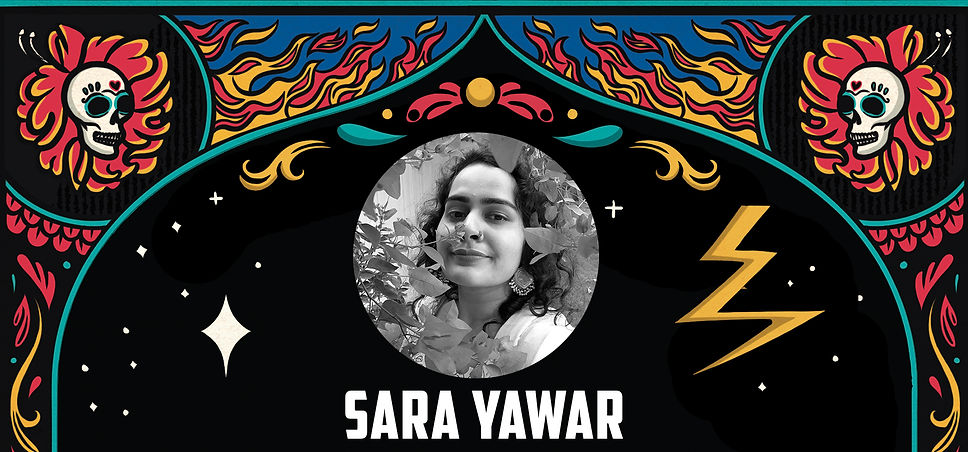
Sara Yawar is a Karachi-based community and cultural worker, writer, feminist organiser and artist. Her multidisciplinary practice explores identity, collective memory and social justice, using creativity as a tool to foster dialogue, build community and inspire meaningful change.
What’s your story?
I am a Pakistan based cultural worker, community organizer, and multidisciplinary artist. After having received my BFA from the Indus Valley School of Art and Architecture in 2017, I was hit with the realization that my art education hadn’t contributed much to my creative skills. People in my surroundings were quite competitive and individual creativity was not given much consideration, which really made me lose my confidence. It was after graduation that I started to explore multiple avenues of creativity.
Contributing to multiple local publications, participating in cross-border collaborations, developing personal projects through archiving and community engagements, making protest art – this is everything I worked towards once I started reclaiming my own art.
In regards to my inspiration, I have more political influences in my work than artistic ones to be honest, probably because I have been reading the newspaper for the last ten years. Not going to say that my work is blatantly political, but I make sure to add innuendos.
Your work often explores identity, perception, and emotional truth. What themes feel most central to your work right now, and why?
At the moment, identity, community, and human ecology are the most prominent themes in my work, as I have been focusing on discovering communities that are at the risk of erasure. My work also involves understanding their relationship to the landscapes that they live on and their sociocultural contributions to it.
You move fluidly between writing, visual work, and conceptual ideas. How do you decide which medium best serves what you want to say?
Haven't given much thought to be honest, all my works have been created very organically. But yes, I really enjoy exploring different mediums. For my most recent body of work for the Aurat March, I really stepped out of my comfort zone and started to experiment with digital drawing. Wanting to make work which can be full of rage yet look vibrant, I decided to draw digitally since illustrations tend to have a stronger impact on social media audiences. Hence, it completely depends on how I feel while picking a medium.
.png)
There’s a strong sense of honesty and vulnerability in your work. How do you navigate exposing personal truths while creating?
I have become quite vocal since the last few years, regarding what I stand for. Society plays a big role in instilling the concept of “shame” and “guilt” in individuals, particularly women. At one point, I realized that since my battles are for me to fight alone then might as well just accept my circumstances. So even if people react negatively to my bold statements, it rarely takes a toll on me.


Who or what has been your biggest inspiration? This could be an artist, writer, experience, or moment that shaped how you see the world.
It was not an inspiration really, more like a personal shift in my life. People and situations started to exhaust me so I had to omit all the noise, after which I started focusing more on myself. In short, it was self acceptance that really made me see the world through a new perspective.
Looking back, is there a piece or project that feels especially pivotal or defining for you so far? What makes it significant?
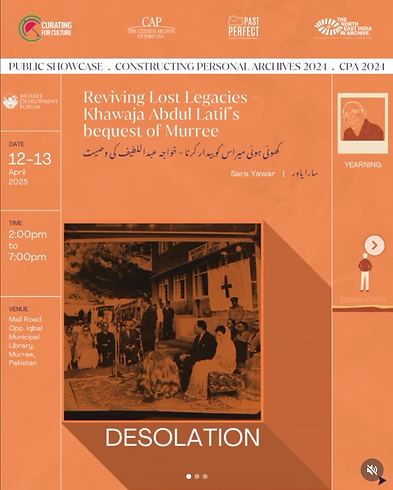
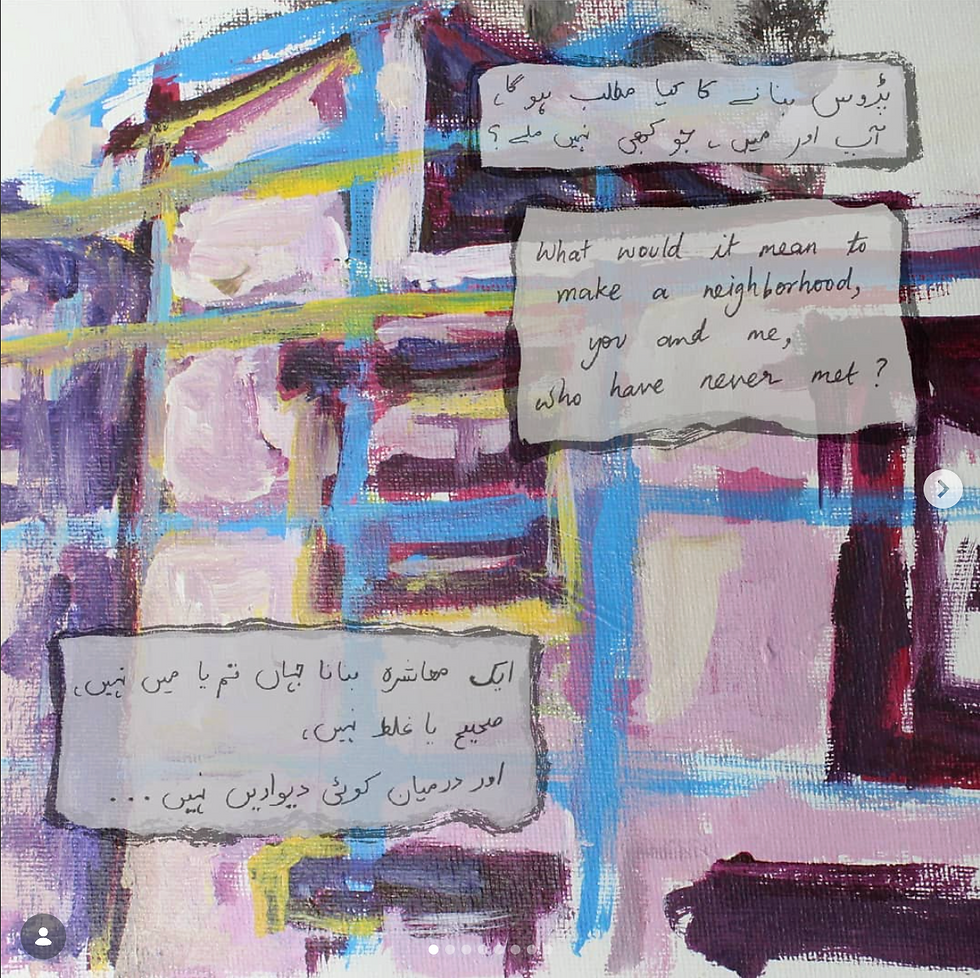
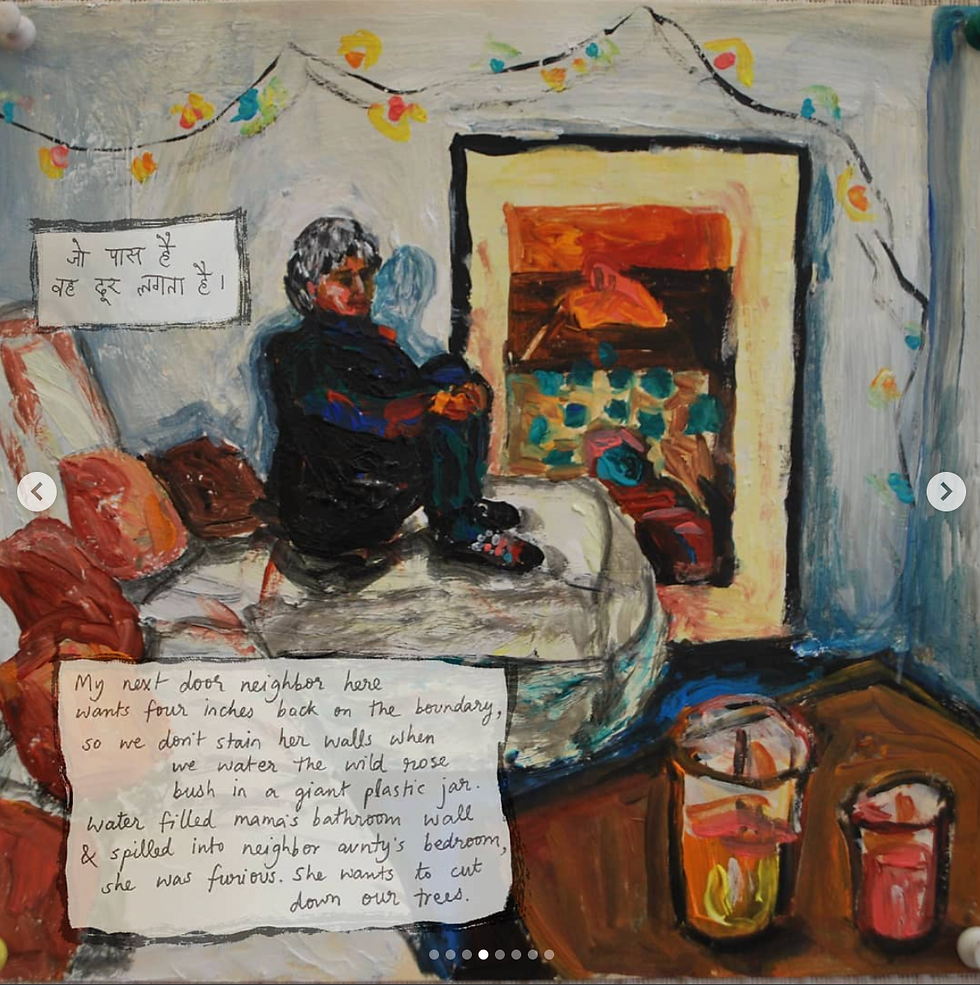
In 2024, I participated in Curating for Culture’s 9 month incubation program called “Constructing Personal Archives”. Through this fellowship, I was introduced to the concept of community engagement, which has really shaped my current creative practice. My project focused on my grandfather’s sociopolitical contribution to Murree during the 60’s and I ended up making an audiovisual documentary on him.
This program made me value community and culture a lot, after which I started making work for grassroots led movements like the Aurat March, who work with women from communities. I currently also work for an organization that has 157 centers across Pakistan and provides healthcare services to the most remote communities in Pakistan. So it feels quite nice to be in the right place in life at the moment.
Read more: https://bangaloreinternationalcentre.org/event/in-search-of-the-community/#reviving-lost-legacies-khawaja-abdul-latifs-bequest-of-murree
https://www.instagram.com/p/DHdjvlntjD8/
If you could collaborate with anyone, living or not, who would it be and why? What would you want to create together?
I would actually love to collaborate with Thom Yorke from Radiohead. I discovered the band during Covid’19 and their music really resonated with me. If not him then maybe Florence Welch from Florence and the Machine, since her music really defines my personality. It would be nice to work on a musical piece with them, given that is the only medium of art I haven’t explored.
If you weren’t working as an artist and writer, what do you think you might be doing instead, and why?
I have already started to get involved in social work and am slowly working towards a more organic life - I grow a lot of herbs at home, dry peels, and also enjoy composting. So yes, maybe having a studio cottage in the mountains where I can grow my own food, care for animals, and live amongst a small community is what I might have done instead. But I might just leave everything and make the move one day. Who knows?
What advice would you give your younger self at the beginning of her creative journey?
Have faith in yourself. Do not let the world take you on a guilt trip and always have confidence in your actions.


Looking ahead, what are you most excited or curious to explore next in your work?
I want to make more politically charged work that comments on wars, society, and the State, and to make more public art to gauge audience reactions - through wheat paste poster campaigns or perhaps through some sort of performance. Let’s see where the tide takes me!